
Tirta Gangga Water Palace
A royal water garden of fountains, ponds, and stepping stones over crystal-clear springs.
Tirta Gangga, meaning 'water from the Ganges,' is a beautiful former royal water palace in East Bali, built in 1946 by the last raja of Karangasem. Spring-fed pools, tiered fountains, ornate stone carvings, and lush tropical gardens spread across the site, all fed by a sacred natural spring. Its most photographed feature is a set of stepping stones that zigzag across a pond full of large koi carp. Partly rebuilt after the 1963 eruption of Mount Agung, the palace today is a tranquil, manicured oasis that captures the artistry of Balinese water architecture.
Awan's tips
- Buy a small bag of fish food to draw the koi toward the stepping stones for photos
- Step carefully on the stones; they can be slippery and the gaps are uneven
- Awan can pair Tirta Gangga with nearby Taman Ujung for a relaxed water-palace morning
Highlights
- Iconic stepping stones across koi-filled spring-fed ponds
- Tiered fountains and an eleven-level decorative water tower
- Lush, manicured tropical gardens and stone sculptures
- Crystal-clear pools fed by a sacred natural spring
- A peek into the legacy of the Karangasem royal family
Good to know
- Entrance is around $3-4 USD; feeding the fish or using certain pools may cost a little extra (approximate, 2026)
- Morning light is lovely and the gardens are quietest before tour groups arrive
- Comfortable shoes are best for the stepping stones; bring sun protection
- Allow about 1 to 1.5 hours to wander the gardens and pools
What is Tirta Gangga Water Palace?
Tirta Gangga is a former royal water garden in the far east of Bali, about 6 km north of Amlapura in the Karangasem regency. The name means "water from the Ganges," a nod to the river Hindus hold sacred. It was built in 1946 by the last raja of Karangasem, Anak Agung Anglurah Ketut Karangasem, who had a real obsession with water and designed much of it himself.
The site covers roughly a hectare and is fed by a natural spring the locals consider holy. Water moves through the whole garden: tiered fountains, koi ponds, a swimming area, and the eleven-tier Nawa Sanga fountain at the center. Most people remember it for the stepping stones, a line of flat stone discs that let you cross the main pond while orange and white koi crowd around your feet.
History and why it nearly disappeared
The raja completed the palace in 1946, only a few years before Indonesia's independence and the gradual end of the old royal system. It was a private pleasure garden for the Karangasem court before it opened to the public.
In 1963 nearby Mount Agung erupted in one of the deadliest volcanic events of the 20th century. The eruption damaged Tirta Gangga badly, burying parts of it in ash and debris. What you walk through today is largely a careful reconstruction, rebuilt by the royal family and the community using the original plans. That story matters when you stand there: the garden has the calm of something very old, but a lot of it is younger than it looks.
What to see when you're there
Give yourself time to actually wander rather than just photograph the famous pond. The layout rewards slow walking.
- The stepping stones across the lower koi pond, the shot everyone comes for, best done early before queues form
- The eleven-tier Nawa Sanga fountain, the tallest structure and the spiritual center of the garden
- Stone demon and deity statues lining the ponds, many spouting water
- The spring-fed bathing pools, where you can swim for a small extra fee (bring a towel and swimwear)
- Tiered terraces and footbridges with views back over the whole garden
- Bags of koi food sold on site, which is why the fish swarm the stepping stones
How to get there and how long you need
Tirta Gangga sits in East Bali, roughly a 2 to 2.5 hour drive from Ubud and closer to 2.5 to 3 hours from the Kuta and Seminyak beach areas, depending on traffic. There is no practical public transport, so almost everyone arrives by car, scooter, or with a driver.
Most visitors spend 1 to 1.5 hours here, or longer if you swim. Because it is out east, it pairs naturally with other Karangasem sights like Taman Ujung and the Lempuyang "Gates of Heaven" temple. On a private full-day tour this is where Awan of Black Pepper Bali Tours can shape the route around you, slotting Tirta Gangga in early so you beat the tour buses, then drifting to the coast for lunch. The entrance fee is approximate but usually runs around 50,000 IDR for adults, with a small extra charge to swim or use a camera tripod.
Best time to visit and avoiding crowds
Come early. The gates open around 7am, and the first hour or two is the only reliable window to get the stepping stones to yourself. By mid-morning the organized tours arrive and the famous crossing turns into a patient queue.
Light is also kinder in the morning: softer, with mist sometimes hanging over the rice terraces nearby. The dry season, roughly April through October, gives you clearer skies, but the garden stays green year-round because the spring never stops flowing. If you can only come midday, aim for a weekday over a weekend.
Photography and cultural etiquette
For the classic stepping-stone photo you want to be the only one on the stones, so early arrival does most of the work. Shoot from the pond's edge looking across, get low to catch the koi, and watch your footing as the stones can be slick.
Tirta Gangga is a water garden rather than an active worship temple, so dress codes are relaxed compared to a place like Goa Lawah. Still, modest clothing is respectful, and if you swim, change in the proper facilities. Don't stand on the fountain structures or sit on the statues, and feed the koi only with the food sold there.
Who it suits
This is an easy, gentle stop that works for almost anyone: families with kids who love feeding fish, couples after a quiet photogenic spot, older travelers who want beauty without a hard hike. The paths are mostly flat and short.
If you only have a single day and never plan to return to East Bali, Tirta Gangga is one of the more memorable ways to spend an hour or two out here, especially combined with the bigger, more open Taman Ujung nearby.
Good to know
Tirta Gangga FAQs
They are a line of round stones crossing a spring-fed pond full of koi carp, the palace's most famous photo spot.
Around $3-4 USD (approximate, 2026), with small extra charges for fish food or certain pools.
About one to one and a half hours is enough to walk the gardens, cross the stepping stones, and relax by the fountains.
Make a day of it
Combine these stops in one day
Tirta Gangga pairs naturally with Lempuyang Temple, Taman Ujung, Goa Lawah Temple and Besakih — they're easily combined into a single private-driver day on the East Bali Full-Day Tour. Tap any stop for its full guide.
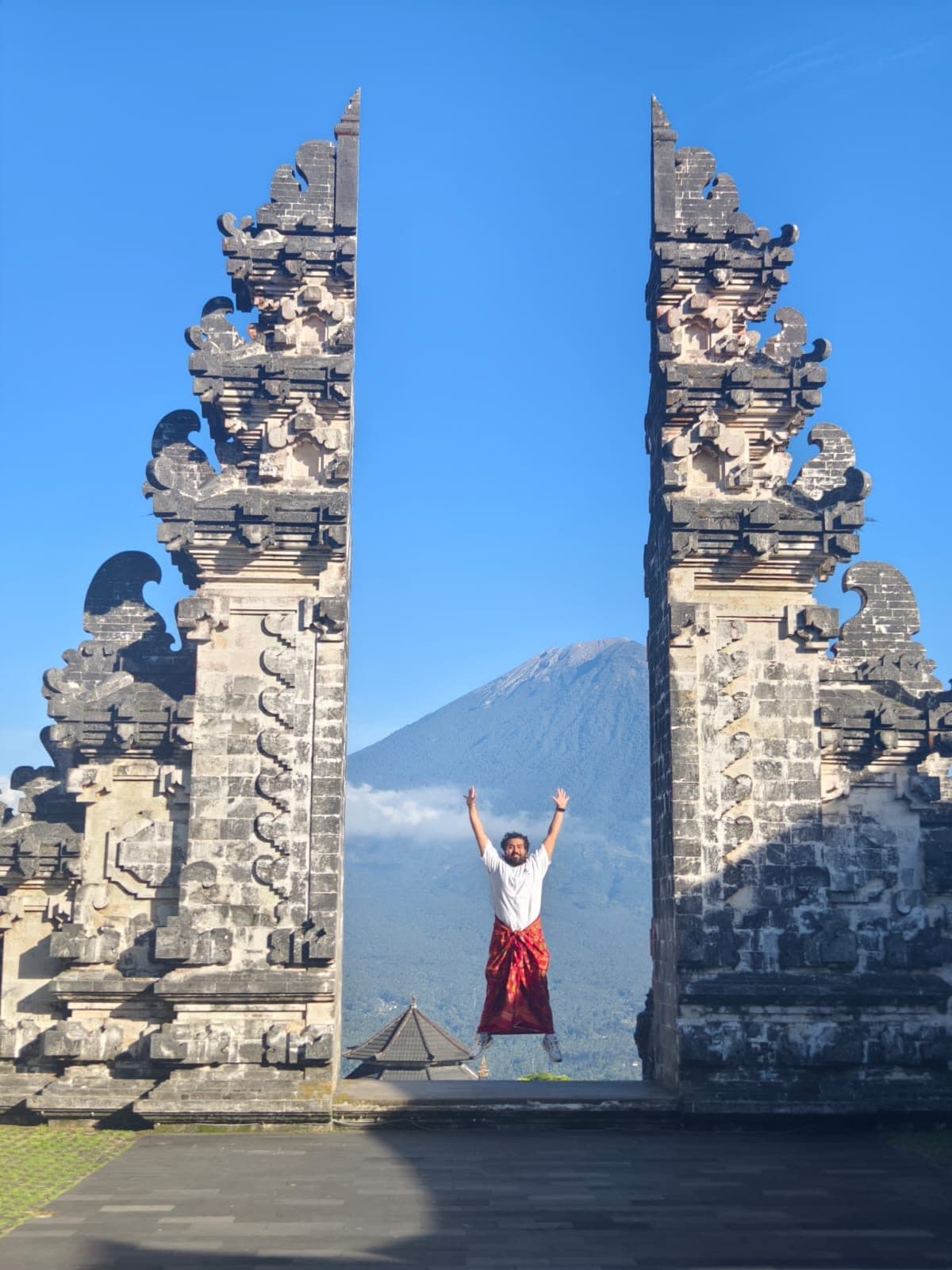
Lempuyang Temple
Home to Bali's famous 'Gates of Heaven,' framing sacred Mount Agung in the distance.

Taman Ujung
A grand royal water palace blending Balinese and European design beside the sea and mountains.

Goa Lawah Temple
An ancient seaside temple built around a cave that shelters thousands of bats.

Besakih
Bali's largest and holiest temple complex, set high on the slopes of sacred Mount Agung in the island's east.

Want to see Tirta Gangga?
Message Awan and he'll build Tirta Gangga into your day in Bali.
No deposit · Pay at the end · Free cancellation · WhatsApp +62 819-3649-4947