
Goa Lawah (Bat Cave) Temple
An ancient seaside temple built around a cave that shelters thousands of bats.
Pura Goa Lawah, the 'Bat Cave Temple,' is one of Bali's six key directional temples, founded in the 11th century on the coast of Klungkung in East Bali. Its name comes from the dark cave at its heart, where thousands of fruit bats cling to the rock and stir in a constant rustle. The temple holds deep spiritual significance and plays an important role in Balinese cremation and purification ceremonies, given its position between the mountains and the sea. With shrines set against the cave mouth and the ocean just across the road, it is a compact but atmospheric stop full of living ritual.
Awan's tips
- Be respectful if a ceremony is underway; stand back and follow your guide's lead
- You view the cave and bats from outside; entering the cave itself is not permitted
- Awan often includes Goa Lawah as a short, atmospheric stop on the East Bali route
Highlights
- A sacred cave home to thousands of fruit bats
- One of Bali's six revered directional temples, dating to the 11th century
- Coastal setting between the sea and the mountains
- Active role in Balinese purification and cremation ceremonies
- Frequent offerings and ceremonies that bring the site to life
Good to know
- Entrance is around $2-3 USD, often including sarong rental (approximate, 2026)
- Mornings are pleasant and you may catch ceremonies; it is a quick stop at any time
- A sarong and sash are required and usually provided at the entrance
- Allow about 30 to 45 minutes to see the cave and shrines
What is Goa Lawah, the Bat Cave Temple?
Goa Lawah is a coastal temple in the Klungkung regency of southeast Bali, built around a cave that is home to thousands of fruit bats. "Goa Lawah" literally means "bat cave" in Balinese. Sit there for a minute and you'll hear them: a constant rustle and squeak from deep in the dark mouth of the cave.
It is one of Bali's most important temples, counted among the Sad Kahyangan, the six great sanctuaries Balinese Hindus regard as the spiritual pillars of the island. The temple is set right beside the main coast road, with the sea on one side and the cave in the cliff on the other.
History and spiritual significance
The temple is traditionally dated to the 11th century and linked to the priest Mpu Kuturan, a key figure in organizing Balinese Hindu temple structure. As one of the six directional temples, it anchors the southeast and is tied to protection and to the relationship between people, the sea, and the spirit world.
Local belief holds that the cave runs deep into the island, with stories tying it all the way to the mother temple of Besakih on the slopes of Mount Agung. A giant serpent, the naga Basuki, is said to live in the cave and feed on the bats. None of this is something you can verify by walking in, and you are not meant to: the cave itself is sacred and off-limits to visitors.
The bats and the role in Balinese rites
The fruit bats are the obvious draw, hanging in a dense, shifting mass across the cave ceiling. They are part of why the temple matters, woven into the local mythology rather than treated as pests.
Goa Lawah also plays a specific role in death rituals. It is connected to nyegara-gunung, ceremonies that link the sea and the mountain, and families come here as part of the purification rites that follow a cremation. If you visit and find a ceremony underway, you are watching something genuinely active and important, not a performance for tourists. Keep your distance and stay quiet.
What to see and how to visit
This is a stop you experience from outside the inner sanctum. The cave, the bats, and the shrines are viewed from the temple courtyard; you do not go into the cave.
- The cave mouth filled with roosting fruit bats, viewed from the courtyard
- The cluster of shrines and meru towers built up around the cave entrance
- The setting between cliff and sea, with traditional jukung fishing boats often on the beach across the road
- Stone carvings and the temple's split gate (candi bentik)
- The sound and movement of the bats, often more striking than any single photo
How it fits a private-driver day
Goa Lawah sits on the southeast coast road, a convenient stop between the south of Bali and the east. From Ubud it is roughly 1.5 hours; from the southern beaches around 1.5 to 2 hours. It is a quick visit, usually 30 to 45 minutes, since you are taking in the cave and shrines rather than walking a large site.
Its position makes it an easy add-on. Heading east toward Karangasem and the water palaces, or out toward the Klungkung sights and the boats to Nusa Penida, you pass right by. On a flexible private tour, Awan can pull in here for a short, meaningful stop without it eating the day. The entrance fee is approximate, usually around 20,000 to 30,000 IDR, and sarong rental is typically included or available for a small charge.
Cultural etiquette and dress code
This is an active place of worship, so the temple dress code applies: you must wear a sarong and a sash around the waist, both usually available to rent or borrow at the entrance. Shoulders should be covered.
A few rules are non-negotiable. Women who are menstruating are traditionally asked not to enter temple grounds, a widely observed Balinese custom. Don't climb on shrines, don't point your feet at sacred objects, and never enter the cave. If a ceremony is happening, let worshippers pass first and avoid standing higher than the priests. Photography of the cave and courtyard is generally fine, but be discreet during prayer.
Best time to visit and who it suits
Early to mid-morning is comfortable and quieter, before the heat and before tour groups passing along the coast road stop in. The temple is small, so even a modest crowd fills it; arriving early helps.
Goa Lawah suits travelers interested in living Balinese religion rather than just scenery, anyone curious about the bats, and people who want a short, atmospheric stop rather than another long walk. It is brief by design, which makes it a natural pause on a longer east-coast route rather than a destination you'd build a whole day around.
Good to know
Goa Lawah Temple FAQs
No. The cave is sacred and home to thousands of bats, so visitors view it from outside the temple area rather than entering.
Around $2-3 USD (approximate, 2026), usually including a sarong, which is required to enter.
It's a compact temple, so about 30 to 45 minutes is enough to see the cave, shrines, and any offerings.
Make a day of it
Combine these stops in one day
Goa Lawah Temple pairs naturally with Lempuyang Temple, Tirta Gangga, Taman Ujung and Besakih — they're easily combined into a single private-driver day on the East Bali Full-Day Tour. Tap any stop for its full guide.
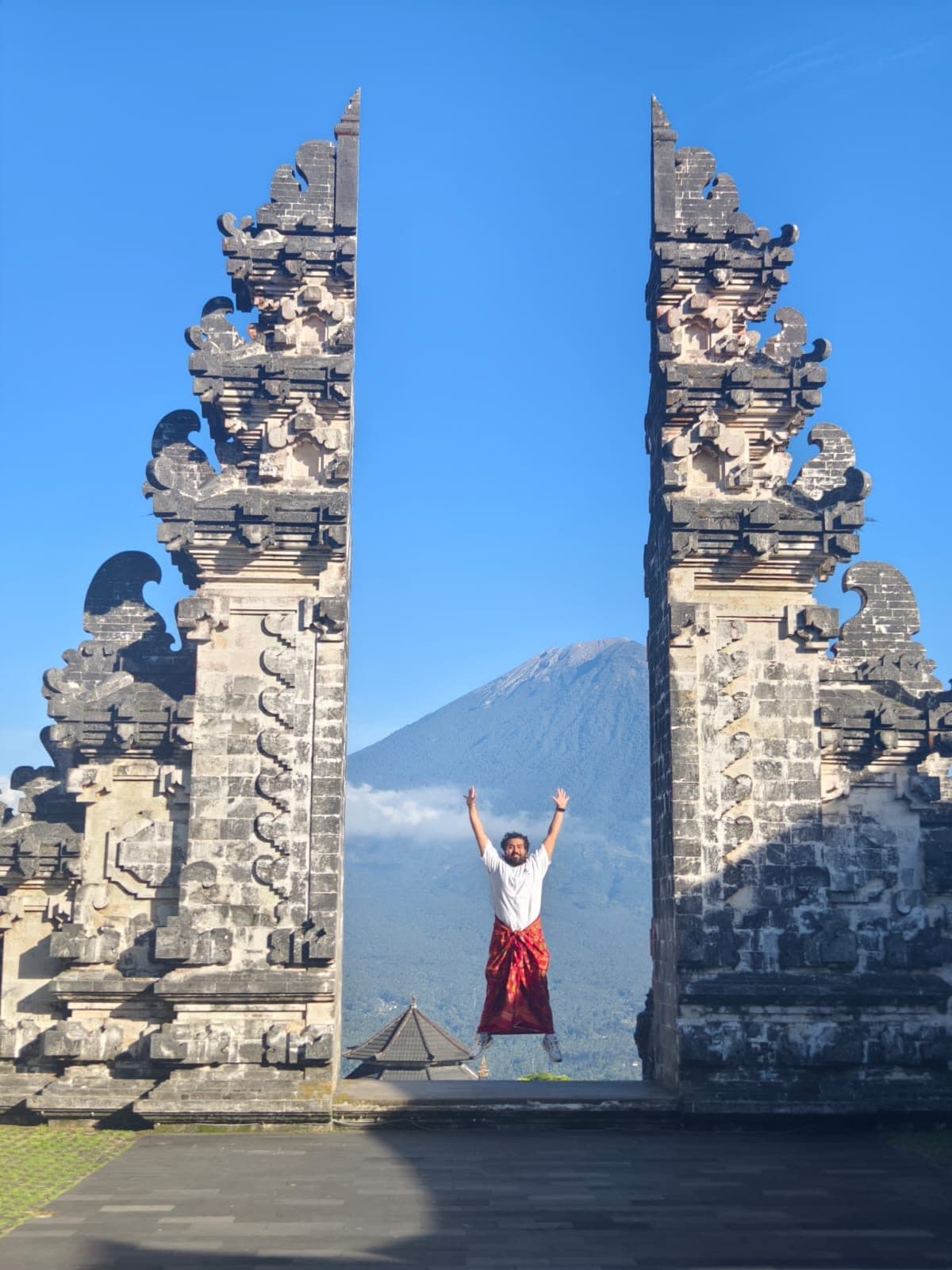
Lempuyang Temple
Home to Bali's famous 'Gates of Heaven,' framing sacred Mount Agung in the distance.

Tirta Gangga
A royal water garden of fountains, ponds, and stepping stones over crystal-clear springs.

Taman Ujung
A grand royal water palace blending Balinese and European design beside the sea and mountains.

Besakih
Bali's largest and holiest temple complex, set high on the slopes of sacred Mount Agung in the island's east.

Want to see Goa Lawah Temple?
Message Awan and he'll build Goa Lawah Temple into your day in Bali.
No deposit · Pay at the end · Free cancellation · WhatsApp +62 819-3649-4947