
Pura Besakih (Mother Temple)
Bali's largest and holiest temple complex, set high on the slopes of sacred Mount Agung in the island's east.
Pura Besakih, known as the Mother Temple of Bali, is the island's largest, oldest and most sacred temple complex, spread across the lower slopes of Mount Agung, Bali's highest and most revered volcano. Rather than a single temple, Besakih is a sprawling network of more than twenty individual temples rising up the mountainside in terraces, centred on the grand Pura Penataran Agung. For centuries it has been the spiritual heart of Balinese Hinduism, the place where the island's most important ceremonies are held. A modern visitor centre and managed access route now organise the experience, and a local guide is part of visiting. Its dramatic mountain setting, scale and significance make it the natural centrepiece of any tour into eastern Bali.
Awan's tips
- Mount Agung is often cloud-covered by midday, so come early if you want a chance of seeing the volcano behind the temple.
- Engage with your assigned local guide — it's part of the system here and a good guide adds real context, but agree any tipping expectation up front and don't be pressured into 'donations' beyond the set fee.
- Non-worshippers generally cannot enter the innermost temple courtyards; respect the boundaries and view the inner shrines from the permitted areas.
Highlights
- The vast multi-temple complex climbing the slopes of Mount Agung, the holiest site in Balinese Hinduism
- Pura Penataran Agung, the grand central temple with its iconic tiered split stairway
- Sweeping views down over the surrounding hills and, on clear days, the volcano above
- Towering meru shrines, ornate gates and ceremonial courtyards throughout the complex
- The chance to witness offerings and, on holy days, large-scale Balinese ceremonies
Good to know
- Entry is organised through a managed system: an approximate combined cost of around 150,000 IDR or more per person typically covers entrance, a mandatory local guide and shuttle access from the visitor centre
- Arrive early, between 8 and 10am, for clearer mountain views before clouds build and before midday heat and crowds
- A sarong and sash are required (rentable on site); also bring sun protection, water and comfortable shoes for the slopes
- Allow 1.5–2.5 hours; suits those interested in culture and grand architecture, with some walking and steps involved
History and significance
Besakih's origins reach back over a thousand years, with the site used for worship since prehistoric times and developed into a major Hindu sanctuary over the centuries. It is considered the holiest temple in Bali, the spiritual mother of all the island's temples, which is why it's called the Mother Temple.
Its position on Mount Agung is central to its meaning: the volcano is regarded as the most sacred mountain in Bali, a dwelling place of the gods. Even the major 1963 eruption of Agung, which devastated surrounding areas, largely spared the temple, an event many Balinese saw as deeply significant.
What to see in the complex
Besakih is not one temple but a complex of more than twenty, arranged on ascending terraces up the mountainside. The central and most important is Pura Penataran Agung, approached by a grand stairway flanked by a split gate, with multi-roofed meru shrines rising behind.
- Pura Penataran Agung, the grand central temple and its stairway
- Rows of tall tiered meru shrines
- Ornate split gates and ceremonial courtyards
- Panoramic views down the slopes toward the coast on clear days
The guide system and how visiting works
Visiting Besakih today runs through a managed visitor centre. After paying the combined fee, visitors are paired with a local guide and typically take a short shuttle up toward the temple area before walking the complex. This system was introduced in part to organise the large numbers of visitors and reduce hassle from informal touts.
A good local guide explains the layout, the meaning of the shrines and the etiquette expected, which genuinely enriches the visit. It's wise to clarify what the fee covers and whether a tip is expected, so there are no surprises.
How to get there and time needed
Besakih sits in eastern Bali on Mount Agung's slopes, around 1.5 to 2 hours by car from Ubud and further from the southern beach areas. The mountain roads are scenic but winding, so a comfortable vehicle and an unhurried schedule help.
Plan on roughly 1.5 to 2.5 hours at the site itself, including the guided walk. Given the distance, most people make it the anchor of a full day in the east, combined with other nearby attractions and lunch with a view.
Best time, photography and etiquette
Morning is best: the air is clearer, Mount Agung is more likely to be visible before clouds gather, and it's cooler for walking the terraced complex. For photography, the central stairway and split gate framing the meru shrines is the classic composition, and the mountain backdrop is the prize on a clear day.
Etiquette is important at this sacred site. A sarong and sash are mandatory, shoulders and knees should be covered, and visitors must stay out of areas reserved for worshippers. Keep quiet near prayers, don't climb on shrines for photos, and follow your guide's direction on where you may and may not go.
Who it suits and how it fits a private-driver day
Besakih suits travellers drawn to culture, religion and monumental architecture, and anyone wanting to see Bali's spiritual heart in its mountain setting. It's less suited to those after beaches or quick, casual stops, given the distance and the formality of the visit.
Because of the long drive, a private driver makes Besakih far easier: a driver such as Awan of Black Pepper Bali Tours can leave Ubud early to reach the temple before the clouds and crowds, then pair it with eastern sites like a slot-canyon waterfall or a traditional village and a scenic lunch, turning a far-flung temple into a comfortable, well-paced day.
Good to know
Besakih FAQs
In practice yes. The site is managed so that visitors are accompanied by a local guide as part of the entry arrangement. A guide helps you navigate the large complex and explains its temples and customs.
You can explore much of the complex and its courtyards, but the innermost sanctums are reserved for worshippers, particularly during prayers and ceremonies. You'll still see the major shrines, gates and architecture from the permitted areas.
Besakih is in eastern Bali on the slopes of Mount Agung, roughly 1.5 to 2 hours by car from Ubud depending on traffic and route, so it's usually built around as a full-day outing with other eastern stops.
Make a day of it
Combine these stops in one day
Besakih pairs naturally with Lempuyang Temple, Tirta Gangga, Taman Ujung and Goa Lawah Temple — they're easily combined into a single private-driver day. Tap any stop for its full guide.
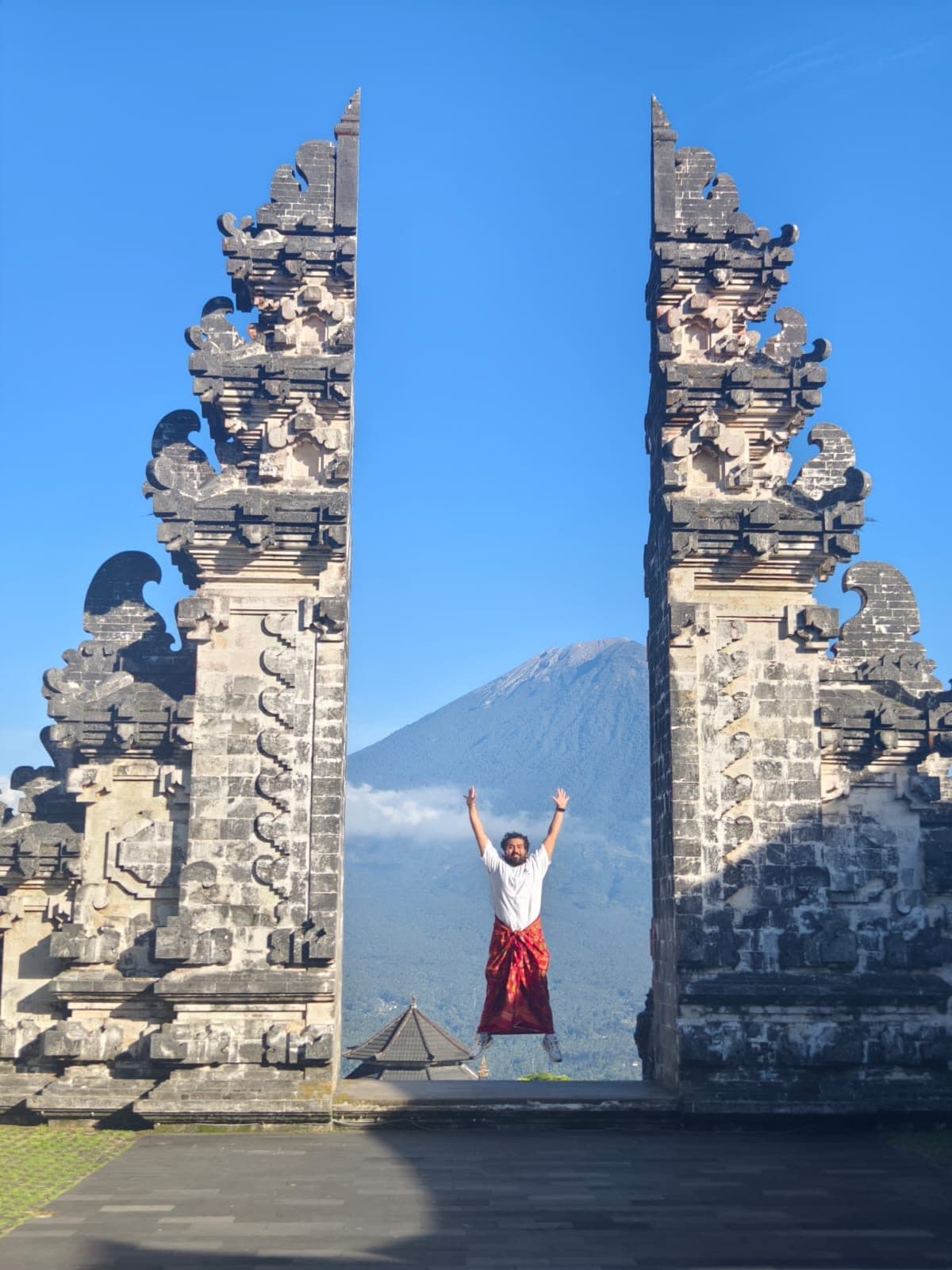
Lempuyang Temple
Home to Bali's famous 'Gates of Heaven,' framing sacred Mount Agung in the distance.

Tirta Gangga
A royal water garden of fountains, ponds, and stepping stones over crystal-clear springs.

Taman Ujung
A grand royal water palace blending Balinese and European design beside the sea and mountains.

Goa Lawah Temple
An ancient seaside temple built around a cave that shelters thousands of bats.

Want to see Besakih?
Message Awan and he'll build Besakih into your day in Bali.
No deposit · Pay at the end · Free cancellation · WhatsApp +62 819-3649-4947